
Report on Multilink Policy Dissemination Meeting
Introduction
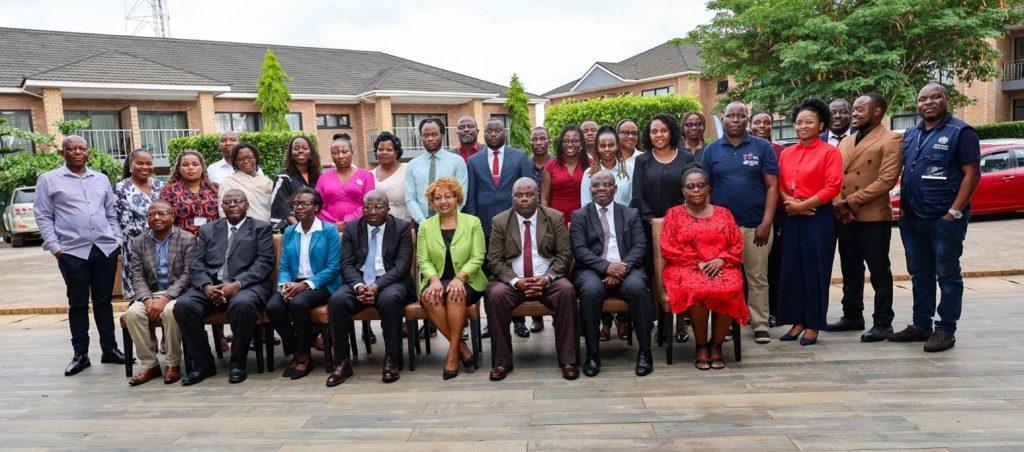
The Malawi Liverpool Wellcome Research Programme, through the Multimorbidity-associated emergency hospital admissions: a “screen and link” (Multilink) Study, hosted a dissemination event on November 12, 2025 at Lifestyle Boutique Hotel in Lilongwe. The event brought together key policy stakeholders, including policymakers, development partners, CSOs, healthcare workers and the media to share findings from the Multilink study. The full list of participants is attached in Appendix 1.
The aim of the meeting was to share findings from the study and its implications on care delivery and patient outcomes with key stakeholders, focusing on: the burden, disease patterns, patient outcomes and costs (clinical and economic insights); health system readiness and health worker experience and experiences of patients living with multimorbidity. The meeting also shared the progress of developing and implementing the Multilink intervention trial.
Objectives
The thematic areas for dissemination were as follows:
- From the first phase cohort study
Clinical and health economics – how big is the problem of multimorbidity in our hospitals for patients coming with acute illnesses? What are the common groups of diseases? What is the state of the patients after 90 days? What are the cost implications of caring for the patients? Health system – how prepared and equipped are our hospitals to address the growing number of people with multiple long-term diseases? What is the experience of health care workers in providing care? What needs to happen to the health system broadly to improve care for multimorbidity
Patient experiences – what have we learnt from patients and their caregivers about their experience with the care they receive from the hospital? What are some of the day-to-day challenges they encounter in managing multiple diseases?
- From the implementation of the trial
Intervention components – What strategies did we consider for enhancing diagnosis, treatment and ongoing multimorbidity care? Implementation progress. What were the lessons learnt from the local implementation sites and global funding landscape that affected the completion of the trial?
Baseline data – What was the number and characteristics of patients that were recruited during the baseline period of the trial. What were the lessons learnt from the local implementation sites and global funding landscape that affected completion of the trial.
Welcome Remarks
Mr Rodrick Sambakunsi welcomed the participants, recognising the guest of honuor Dr Ngoma, the Director of Curative and Medical Rehabilitation Services, Dr Kathyola Chairperson of NHRSC, colleagues from MoH, CSOs, MLW, the media and KUHeS. He invited participants to introduce themselves.
Remarks from MLW and KUHeS
Prof Adamson Muula provided the opening remarks on behalf of KUHeS and MLW. Prof Muula reflected on the lessons learnt from the Multilink study and highlighted the strengths of Malawi’s health ecosystem, including collaboration, mutual learning, and a shared commitment to improving population health. He emphasised the mission of MLW to conduct research that improves lives, contributes to the understanding of health, and is anchored in the Malawian context. The study has brought together clinicians, social scientists, and health systems researchers to understand multimorbidity and to design practical approaches for management, screening, and linkage to care. He acknowledged collaborators in the study, including the NHIS, which provided funding, and invited participants to engage in discussions to map the landscape for multimorbidity in Malawi.
Remarks from NCD Division
Mr Hastings Chiumia offered remarks from the MoH NCD Division. He highlighted the NCD burden in Malawi as a major public health challenge. He also acknowledged the role that partners play in this fight, specifically applauding the efforts of researchers at MLW and he invited the guest of honour to provide his remarks.
Opening remarks, MoH
Dr Jonathan Ngoma, the guest of honour, opened the meeting. He highlighted that the population of Malawi is aging, and this is further enhanced by the availability of ARTs. The prevalence of NCDs is also increasing. Even though infectious diseases can be treated at all levels of care, complications from NCDs require specialised and super-specialised services (quaternary). This study justifies the integration of services and will play a vital role in informing how best integration can be successfully completed. The goal is to bring services closer to the people who need them. MoH urges partners that achieving universal health coverage will not depend on the availability of resources but on how the health system can integrate, innovate, and apply knowledge to strengthen the gap between research and practice.
Introduction to the Multilink Study
Dr Marlen Chawani provided an overview of the Multilink Study on behalf of Dr Felix Limbani.
Key highlights:
- Multilink is a consortium comprising the Kamuzu University of Health Sciences, the Malawi-Liverpool-Wellcome Programme, the Liverpool School of Tropical Medicine, the Muhimbili University of Health and Allied Sciences, and the Kilimanjaro Christian Medical Centre in Tanzania. During the presentation, she explained that multimorbidity refers to the presence of two or more chronic conditions. Dr Chawani further highlighted that the study was conducted between September 2021 and August 2025 and presented the objectives of the study.
- Dr Chawani then outlined the upcoming presentations as follows: clinical and health economics, health system response, and lay perspectives. She also highlighted the publications that emerged from the study and acknowledged all stakeholders involved.
Additions from Dr Limbani
- Dr Limbani emphasised that the study start coincided with the onset of the Covid-19 pandemic, and it became clear that patients with multimorbidity were highly affected by Covid-19. Understanding the magnitude of multimorbidity, enhancing screening, understanding outcomes at days 30, 60, and 90, and the economic and health systems aspects became priorities and were covered by the study.
- Regarding the objectives of the study, the team was able to understand the burden of multimorbidity and to design a strategy to screen for multimorbidity, but they have not yet tested the strategy for screening.
The burden of multimorbidity and patient outcomes
Dr Stephen Spencer presented on the prevalence of multimorbidity and clinical outcomes of patients who present to the hospital with acute conditions. He emphasised the dual burden of both high rates of communicable diseases and NCDs in Sub-Saharan Africa (SSA), which puts pressure on health systems.
Dr Spencer presented results from the multimorbidity systematic review (please refer to presentations for more information).
- Many studies focused on individual diseases, with no studies on multimorbidity, under controlled diseases, and a lack of uniform diagnostic criteria. The Multilink study aimed to address these questions in Tanzania and Malawi.
- Dr Spencer presented the results, showing multimorbidity in almost half of the patients, with increasing mortality as the number of conditions increased.
- He proposed that there is a need for multimorbidity care pathways to improve detection and outcomes for patients living with multimorbidity.
- The study also examined breathlessness and found that it is common, involves multiple conditions, and is associated with substantial mortality. There is therefore a need to move beyond single-disease interventions to improve survival.
Participant comments
Question on stratification for age and gender in the study: Multimorbidity was seen at much younger ages; 40% of patients had multimorbidity and about 60% were over the age of 50 (details are in the Lancet paper). Just over half of the patients were female.
What were the confounders in the study in terms of predicting survival and how were these adjusted for in the analysis?
Were drug interactions one of the exposure variables used for analysis, as they are a significant predictor for survival?
Health system readiness to management of multimorbidity
Treighcy Banda gave a presentation focusing on an assessment of health service delivery for adults living with multimorbidity in Blantyre and Chiradzulu. She outlined the objectives, the data collection process, and the key findings. She highlighted that although policies in Malawi advocate for integrated disease management, healthcare workers felt that the healthcare system is not ready to manage multimorbidity, and there is a lack of resources. Challenges include system inefficiencies exemplified by poor communication between different MoH directorates. More details are available in the presentation.
Participant comments
- Was the tool used to assess for health system readiness validated in Malawi?
The WHO tool was previously used in Malawi for the Malawi Service Provision Assessment (2014).
- If a patient is referred within the department, was it considered that the facility was not ready (ex a patient at a central hospital has multiple conditions referred from one specialist to another within internal medicine)
Readiness was only assessed in primary facilities within the scope of the study. However, referring across the departments would qualify as readiness.
Participant contributions
- Dr Matanje referred to comments made earlier alluding to the lack of communication between the MoH NCD and HIV departments. She acknowledged the Community of Practice for integration of NCDs, specifically for hypertension, which happened before 2018, which informed the incorporation of hypertension screening into HIV guidelines. She lamented that screening has, however, remained limited to hypertension.
- She applauded the project for focusing on multimorbidity rather than comorbidity alone. She noted that this is relevant given that the follow-up HIV guidelines incorporate other conditions such as diabetes, mental health, and substance use disorders.
- Dr Matanje addressed the Ministry of Health’s Curative Department, noting that although there is policy support for integration (HSSP III, the HIV guidelines, and the NCD Strategy) this has not yet translated into practice.
- She highlighted that there have been many efforts towards integration and posed the question to the MoH on how best, through the MoH research department, an ongoing community of practice can be developed to foster continuous engagement not only for HIV and hypertension but for comprehensive integration. She proposed that this can be anchored in HIV and hypertension programming since there are already existing mechanisms.
- Dr Matanje called for participants to develop a tangible output or recommendation to allow follow-through.
Health system and patient-related costs for managing multimorbidity.
Prof Eve Worrall presented on health system and patient-related costs for managing multimorbidity. She remarked there is limited economic evidence on treating multimorbidity from both provider and patient perspectives. Prof Worrall indicated that studies from other health systems suggest an increase in costs as health conditions increase. Understanding these costs will inform health planning and universal health coverage.
She proceeded to present the objectives, methods, and results on behalf of a PhD candidate Dr Nateiya Yongolo (please refer to the presentation for more details). Prof Worrall concluded that multimorbidity leads to higher out-of-pocket expenditure for patients and their families, and it is not completely cushioned by free health services. Health system costs are higher for patients with multimorbidity.
The investigators call for greater preparedness for multimorbidity by strengthening primary care systems to screen and manage PLWMM, financial protection mechanisms, and integrated care models.
Participant Comments
- What combination of the conditions led to higher cost?
The small sample size limits analysis for the different dyads and triads.
From the health system perspective, drug costs were noted as a significant contributor to overall costs. It was observed that although HIV medication is financed by the Global Fund, the medication itself is relatively expensive. This prompted discussion on whether HIV may be one of the drivers of medication costs for individuals living with both HIV and multimorbidity.
For the patient costs, there would be a need to disaggregate the costs to determine which costs are directly correlated to the type of disease a patient has (ex, supplementation of medicines out-of-pocket).
- A participant asked whether the multimorbidity had been clustered according to consequences, such as disabilities, noting that this type of classification would help inform the prioritisation of interventions and efforts.
Prof Worrall assured participants that this will be considered in future analyses, bearing in mind potential limitations due to sample size.
Perspectives of patients and their caregivers
Ms Sangwani Salimu presented on the lived experiences of patients with multimorbidity. She expressed that there is limited exploration of the lived experiences of PLWMM in SSA and Malawi specifically. She outlined the objectives, methods, and results (please refer to the presentation for more details). To conclude, she noted that care seeking and decision-making for PLWMM is complex and decisions are based on multiple premises. It is imperative to address barriers to the management of multimorbidity.
Participant Comments
- How many studies included in the evidence synthesis were from Malawi and what were the key recommendations?
There was one study done by MEIRU, the recommendations included consultations between patients and health workers.
Panel Discussion
Recommendations in multimorbidity management (Christabel Komakoma, Gladstone Mchoma, Dr Francis Makiya)
Dr Chawani facilitated a panel discussion focusing on how the findings from the Multilink study can inform practice and policy.
Dr Francis Makiya offered the following perspectives on the challenges that healthcare workers are facing in managing PLWMM and the potential solutions:
- Both primary and secondary services are offered at the district hospital, leading to heavy workloads. This has implications on the quality of consultations, as there is not enough time to address all concerns, and usually only immediate issues are tackled. This results in patients returning to the hospital.
- Services are also offered in a fragmented manner, and this is evident in how researchers interact with policyholders. Supervision at the district level is done in silos, focusing on individual diseases such as HIV or malaria. This affects how consultations are done, often lacking a holistic approach. Pill burdens and medication are also often not considered for patients using multiple medications. Furthermore, there is limited time for motivational interviews and counselling.
- In the current climate, as we are experiencing donor fatigue, it is becoming difficult to get commodities for diseases such as HIV and mental health as they have been managed as individual programmes.
- There is a need to leverage existing structures; integration should happen at all levels, from patient care to mentorship. Task sharing should be prioritised to ensure good quality of care, and medication reviews should also be prioritised. Since the system is mostly paper-based, the same tools should be used to track patients (for example, diaries used for epilepsy patients).
Christabel Komakoma responded to a question on priorities to improve equity and responsiveness in care for PLWMM,
- She noted that Malawi has not honoured its health financing commitments under the Abuja Declaration.
- She stressed that, from a patient perspective, services must be brought as close to communities as possible through well-distributed and well-resourced primary facilities.
- She also highlighted the importance of recognising gender dynamics in care, where men often display poor health-seeking behaviour and women usually serve as caregivers. In addition, she emphasised the need for increased community education and awareness to support access and continuity of care.
Mr Choma responded to a question on policy and financing mechanisms that can shield households from catastrophic health spending
- He called for the removal of siloed financing structures. He observed that some disease areas, particularly HIV and TB, receive substantial funding while NCDs remain under-resourced, and argued that integration should target not only service delivery but financing as well.
- He acknowledged resistance to integration due to fears of job losses and shifts in partner funding priorities.
- He explained that the Health Systems Package is currently being piloted with linkages across all health system building blocks and suggested that pooled financing could be complemented by additional tax revenues, including those from cigarettes and alcohol, as the Ministry continues working toward full integration.
Ms Komakoma also responded to a question on approaches to improve community awareness of multimorbidity.
- She emphasised the need for a mindset change and empowering people with knowledge about their own health so they can make informed decisions and adhere to care. She advocated for the use of diverse strategies that actively involve community structures to reinforce awareness and self-management of chronic conditions.
Participant Comments
- Prof Muula commented that the focused attention on HIV is justified given the magnitude of the disease, noting that vertical programming may have been instrumental in enabling progress in the HIV response.
- He further lamented that Mwanza has only three health centres and that the population remains underserved. He observed that people arrive as early as 4 a.m. to access services and appealed for the district to receive greater attention.
- Prof Muula also proposed the faith community as a potential funding source for the health sector.
Mr Chiumia posed a question to the planning department, whether Malawi has any plans to introduce paying services as one of its health financing strategies.
- Mr Choma responded that, as the Department of Planning, consultations with various stakeholders have shown a growing consensus that the government cannot continue providing free health services across the board. He noted, however, that this is a political issue and a sensitive message to communicate to the electorate.
- He also pointed to the introduction of optional paying services in some districts as an indication of progress. He added that there is a need to establish mechanisms to identify who is Malawian and therefore eligible to access services using national IDs, as well as to distinguish between those who are poor and those who are not in order to determine who should receive free services.
Regarding the need for investment in Mwanza, Mr Choma noted that the Capital Investment Plan has prioritised Mwanza as an area where new health centres should be built.
- The Public Health Act is currently under review in Parliament, and the bill proposes that Malawians should pay a nominal fee per visit.
- There was also a proposal for Malawians to join medical schemes, including the introduction of an in-house scheme for civil servants, to reduce the fiscal gap.
- Other sentiments included the need to have a holistic view of health, considering social determinants such as housing and education.
- Dr Chiwanda commented that integration does not need to be all-encompassing; rather, the elements that are suitable for integration should be integrated, while those that are not should continue to be implemented in their current form. He proposed a phased approach to integration. He also emphasised the need for policies regulating sugary products, the establishment of recreational spaces within workplaces and the introduction of levies for tobacco and road traffic.
- Dr Matanje emphasised that in terms of integration, the low-hanging fruit is service delivery at either district or facility level. She posed a question to Planning department about the nature of integration which is being piloted currently.
Mr Choma clarified that the Planning Department, the Curative Department, PIH and USAID have been involved, and that the focus of the work is on service delivery, particularly screening, as well as maternal and child health.
Design of Multilink trial and intervention component, progress, closure, and next steps
Dr Ben Morton presented on the trial to improve outcomes for patients admitted to hospital in sub–Saharan Africa with multimorbidity. He mentioned that even though the trial will not proceed, some of the learnings may be valuable for policymakers and clinicians and can be used and adapted.
Dr Morton highlighted the purpose of the strategy, describing it as a context-sensitive set of interventions designed to improve diagnosis for people living with multimorbidity and to enhance disease management and the prevention of complications. Dr Morton outlined the methodology, the nature of the intervention, and the disruption in funding (please see the presentation for more information).
Way Forward
Dr Limbani thanked participants for engaging in discussions around the multilink study. He reiterated the importance of evidence-informed programming and reflected on how policy makers and researchers have come together to discuss research findings, find research gaps, and strategize of improving healthcare delivery. He also reflected on the value of the multiple perspectives expressed through the panel discussion. Dr Limbani thanked the MoH for continued support.
Closing Remarks
Dr Ngoma closed the meeting by reflecting on financing, integration, and access to services for the poor. He encouraged continued collaboration and emphasised the need to strengthen healthcare provision for Malawians, particularly in anticipation of the gradual increase in the older adult population.